
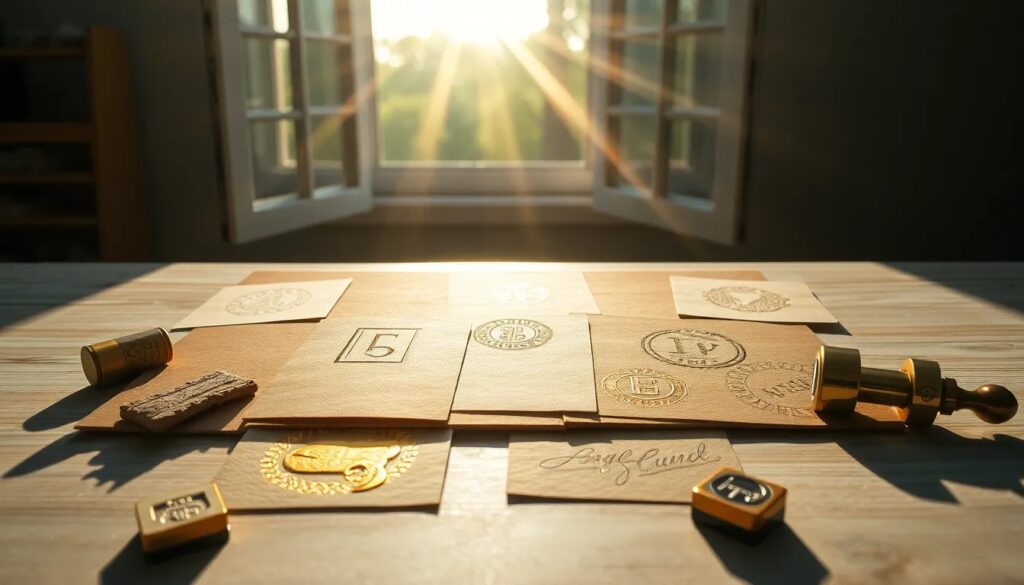
A gold detail can give character to an invitation, box or book cover, but not every metallic finish is produced in the same way. Traditional gold foil stamping uses a transfer foil and pressure, normally combined with heat, to apply the effect to the substrate.
Before ordering, decide which areas will carry foil, which paper will be used and whether the artwork contains particularly small details.
Foil stamping transfers a film to create a metallic or other decorative effect. It is not simply a gold-coloured CMYK ink.
How traditional foil stamping works
A die carrying the design transfers the film onto the selected areas. Temperature, pressure and dwell time depend on the materials and equipment. Combining a metallic finish with embossing may require additional processes and tooling.
Gold, silver and other foil colours
Foils are available in metallic and many other effects. Gold tones vary between products. If brand identity requires a specific appearance, approve a physical foil sample before production.
Die stamping, digital foil and metallic ink
| System | What it provides | What to check |
|---|---|---|
| Die foil stamping | Localised film transfer with a tool | Setup cost and minimum detail |
| Digital foil | Application according to the equipment and process | Paper and artwork compatibility |
| Metallic ink | Printed ink with a metallic effect | Appearance differs from foil |
These finishes are not equivalent; ask to see representative samples.
Which materials can be foil stamped?
Compatibility varies with texture, absorbency and surface treatments. A very rough paper may behave differently from a smooth one. Also consider whether the piece will be folded after stamping.
Packaging and stationery applications
Foil is used on covers, labels, invitations, cards and boxes to emphasise selected details. It can be combined with conventional printing on custom packaging, subject to the design and material.
How to prepare foil-stamping artwork
- Define the areas receiving foil precisely.
- Create the separate layer or spot colour requested by the printer.
- Avoid extremely fine lines without confirming the technical minimum.
- Check folds, cutting lines and the safe margin.
- Approve the foil sample and selected substrate.
Frequently asked questions
Are foil stamping and CMYK gold the same?
No. CMYK can simulate a colour but cannot reproduce the same reflection as a metallic film.
Is all foil stamping embossed?
No. Embossing is a separate effect that can be combined with foil.
Can it be applied to textured paper?
That depends on the process and substrate; production testing is advisable.
Are you preparing a premium printed piece? Tell us the quantity, format, material and finish so we can assess production.
This post is also available in:
 Français (French)
 Português (Portuguese (Portugal))
 Español (Spanish)