
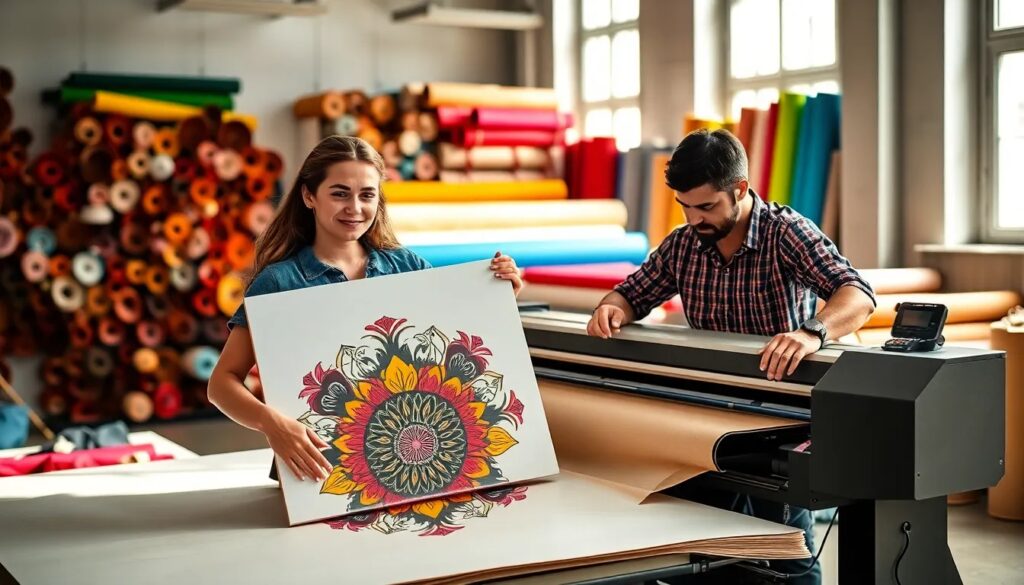
Printing on fabric is not the same as printing on paper. Fibre composition, weave and material treatment affect colour reproduction, feel and resistance in use. Before requesting custom fabric printing, specify the product you want to make.
A textile graphic for an exhibition, a flag and a T-shirt are different applications. This guide explains common techniques without assuming that every process is available from the same printer.
Which techniques are used to print on fabric?
Dye sublimation
This is used with certain compatible textiles and substrates, especially polyester or materials prepared for the process. Heat transfers the dyes, but the method does not work in the same way on every fibre.
Digital textile printing
This term covers different technologies that apply ink or dye to fabric. The machine, ink and textile composition must be compatible.
Screen printing
Screens are used to apply inks. It can be suitable for certain quantities and designs, although setup and the number of colours affect production.
Which textile should you choose?
Cotton, polyester and blends have different characteristics. Also consider whether the finished product will be washed, used decoratively, stretched over a frame or exposed outdoors.
Review the fabric specification and intended technology together. A lightweight textile suitable for a display may not work for a bag or frequently worn garment.
Comparison of applications
| Application | What to prioritise |
|---|---|
| Exhibition and display | Tension, transport, creasing and installation |
| Interior decoration | Texture, reproduction and drape |
| Garment | Comfort, washing and ink compatibility |
| Outdoor use | Environmental resistance and fixing system |
How to prepare an image for fabric
- Define the finished dimensions.
- Ask about sewing, finishing and fixing areas.
- Check the effective resolution of photographs.
- Keep important elements away from hems and eyelets.
- Review the colour workflow and request a sample where necessary.
Wash resistance and colour retention
No universal level of resistance can be promised. It depends on the fabric, inks, fixation and aftercare. If the piece will be washed, obtain the specific care instructions and check samples before a large production run.
How to request a quotation
Specify the dimensions, fabric, quantity, installation location, expected duration and whether sewing or finishing is required. For large visual-communication pieces, compare the textile with banners and rigid substrates before confirming the material.
Fabric printing is not the only way to customise clothing: embroidery, transfers and other processes may be more appropriate depending on the design, quantity and washing requirements.
Frequently asked questions
Can conventional sublimation be used on cotton?
Conventional dye sublimation is intended for polyester or compatible surfaces, not untreated cotton.
Which technique is best for a small quantity?
It depends on the fabric, design and available technology.
Can printed textiles be used outdoors?
Only with materials, inks and finishes suited to the exposure.
Do you have a textile-printing project? Tell us the format, material, quantity and intended use so we can assess production.
This post is also available in:
 Français (French)
 Português (Portuguese (Portugal))
 Español (Spanish)